What Is Drayage and Why It Matters for FBA Sellers
Drayage can decide whether your Amazon FBA shipment arrives on time or gets hit with extra port fees. For many sellers importing from China to the U.S., this short truck move is where delays turn into missed Amazon appointments, demurrage, detention, and stockouts.
If I had to sum it up in plain English, it’s this:
- Drayage is the short truck trip from a port or rail ramp to a warehouse, prep center, or Amazon delivery point.
- It matters because the clock starts fast after a container is available for pickup.
- The main risks are timing gaps between customs, terminal pickup, prep work, and Amazon receiving.
- Common charges can add up to hundreds or even thousands of dollars per shipment.
- The fix is simple: I need one clear timeline for customs, pickup, warehouse receiving, and Amazon appointment booking, plus a 24–48 hour buffer.
A few points stand out right away:
- A delayed pickup can lead to demurrage at the terminal.
- A slow unload can lead to detention on the container.
- A missed Amazon slot can mean re-delivery fees and later check-in.
- Extra stops between port, prep warehouse, and Amazon mean more handoffs, more delay risk, and more cost.
| Topic | What it means for me |
|---|---|
| Drayage | Short-haul container trucking after port or rail arrival |
| Main problem | Timing, not distance |
| Cost risk | Demurrage, detention, chassis, and wait-time charges |
| FBA impact | Missed appointments, later receiving, stockouts |
| Best move | Keep customs, drayage, prep, and Amazon delivery on one shared schedule |
Bottom line: if I treat drayage like a small side task, I risk paying for it later. If I plan it early, I give my shipment a much better shot at reaching Amazon on time. For a deeper look at the entire logistics chain, see our guide on shipping to Amazon FBA.
Amazon Inbound Freight Guide: How to Stop Losing Thousands on Every FBA Shipment | AMZ Prep
sbb-itb-f9a91f9
How drayage connects to the Amazon FBA shipping flow
In FBA shipping, drayage links port or rail arrival to the next stop in the chain. The big issue here isn’t mileage. It’s timing. If this part slips, the next handoff slips too.
Common drayage routes FBA sellers use
You see that time pressure in a few common drayage moves:
- Port to warehouse: After customs clearance, a drayage carrier picks up the container from the terminal and takes it to a nearby warehouse.
- Port to FBA prep warehouse: The container goes straight to a prep center, where the team unloads loose cartons, checks FNSKU barcodes, and palletizes everything to spec before the last delivery leg.
- Rail ramp to warehouse: For inland destinations, containers often move by rail from coastal ports like Los Angeles/Long Beach, then a drayage carrier covers the last 30–150 miles to a warehouse. This can cut truck cost, but ramp handling adds time.
- Warehouse to Amazon fulfillment center: After prep is done, one last drayage move takes pallets or cartons to the assigned Amazon fulfillment center.
This is usually where delays and extra fees start piling up. One late pickup or one slow handoff can ripple through the whole shipment.
Why Amazon delivery appointments make drayage timing critical
Amazon fulfillment centers work on scheduled receiving appointments. If your container is still at the port, or stuck at the prep warehouse when that appointment window opens, you miss the slot. Then receiving gets pushed back.
Put simply, drayage timing decides whether your inventory gets to Amazon on schedule.
Drayage problems that increase FBA delays and costs
When the ocean leg ends, drayage becomes the part that decides whether your inventory keeps moving or gets stuck. At that point, the main trouble spots change. Instead of focusing on the vessel, you’re dealing with terminal access, truck supply, and appointment timing.
Demurrage, detention, chassis, and wait-time charges explained
Demurrage is the fee charged when a container stays at the terminal after free time ends. Detention is the fee charged when the container stays out too long after pickup, such as when a prep warehouse needs extra time to unload and return the empty container. Chassis fees add another charge when equipment must be pulled from a separate pool. Wait-time charges are billed by the trucking company when drivers sit idle at a terminal gate or at your prep warehouse waiting to load or unload.
These charges can stack up fast. In many cases, they add hundreds or thousands of dollars to a shipment. They can also trigger storage fees, re-delivery charges, or stockouts.
Port congestion, limited truck capacity, and customs timing gaps
Even when a shipment is cleared, it can still sit still if the truck, chassis, or terminal slot isn’t ready.
Customs clearance does not move the container. The gap before truck pickup is where demurrage starts. Port access is limited to qualified carriers with the required credentials, which shrinks the pool you can use on short notice. If the port is congested, that delay can get worse. And if no chassis is available at the terminal, the driver can’t move the container even when the cargo has already cleared.
Customs timing gaps can slow things down too. A late or incomplete filing can trigger inspection, delay clearance by days, and push your pickup date closer to the end of free time.
Extra transfers between port, prep warehouse, and Amazon
The risk goes up again when the shipment needs one more stop before Amazon.
A route from the port to a prep warehouse and then to an Amazon fulfillment center adds more handoffs and more ways for the schedule to slip. Every extra stop adds handling time and increases the odds of missing a window. The outbound leg to Amazon needs a confirmed delivery appointment, and if that window is missed, the shipment can face re-delivery charges and a later receiving date.
Put simply, each added transfer costs more and makes the timeline harder to manage.
How to reduce drayage risk through better coordination
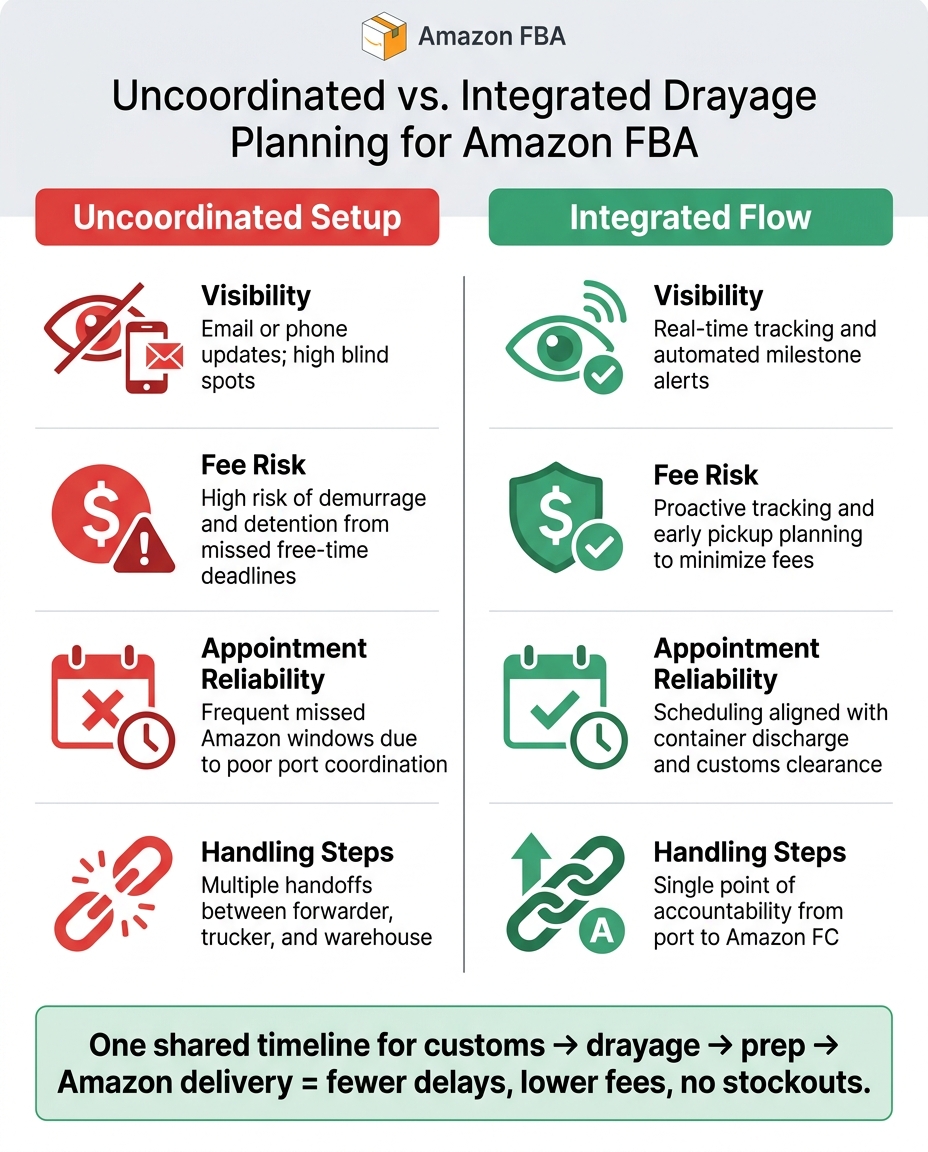
Uncoordinated vs. Integrated Drayage Planning for Amazon FBA
Once you know where delays tend to happen, the next step is simple: tighten coordination before the container leaves the terminal. A lot of drayage problems start when pickup, customs, warehouse readiness, and Amazon appointments are handled in silos instead of on one schedule.
Shipment details to confirm before container pickup
Before the container gets picked up, confirm these details with your forwarder:
- Terminal info: Container number, seal number, and terminal or rail ramp location
- Customs & timing: ISF 10+2 filed, U.S. Customs clearance confirmed, and the Last Free Day for both the container and chassis
- Destination: Prep warehouse or direct-to-FBA, Amazon FC code (such as ONT8 or GYR3), and FBA shipment ID
- Cargo specs: Total carton count and pallet count. Share gross weight and axle weight before pickup so the carrier can book the right chassis and route. Also confirm the load type: floor-loaded, palletized, or clamp unloading required
Miss one of these details, and the whole move can start to wobble. A truck may show up with the wrong chassis. A warehouse may not be ready. An Amazon appointment can slip before the container even gets moving.
How FCLGO connects drayage, prep, and Amazon delivery
The best way to cut risk is to have one party handle customs, drayage, prep, and Amazon booking together. That removes the usual gaps between teams and keeps the shipment moving on one timeline.
FCLGO coordinates drayage, customs, prep, and Amazon delivery in one flow. That means fewer handoff issues, one coordinator, and live tracking that keeps pickup, prep, and final delivery lined up.
Uncoordinated drayage vs. integrated drayage planning: a side-by-side comparison
| Feature | Uncoordinated Setup | Integrated Flow (FCLGO) |
|---|---|---|
| Visibility | Email or phone updates; high blind spots | Real-time tracking and automated milestone alerts |
| Fee Risk | High risk of demurrage and detention from missed free-time deadlines | Proactive tracking and early pickup planning to minimize fees |
| Appointment Reliability | Frequent missed Amazon windows due to poor port coordination | Scheduling aligned with container discharge and customs clearance |
| Handling Steps | Multiple handoffs between forwarder, trucker, and warehouse | Single point of accountability from port to Amazon FC |
That kind of coordination is what stops drayage from snowballing into a missed Amazon appointment.
Conclusion: Why drayage belongs in your FBA freight plan
Drayage links the port, the prep warehouse, and Amazon receiving. That makes it one of the main planning points in any FBA shipment. It may be the shortest leg, but it often carries the biggest timing risk. So it shouldn’t sit in the afterthought column. It belongs in the freight plan because it can decide whether your inventory moves on time.
Key takeaways for importers shipping from China
If you’re importing from China, the fix is pretty simple: plan drayage with the same urgency you give ocean freight and Amazon booking.
Treat drayage as part of the shipment, not a separate errand. Before pickup, confirm:
- Last Free Day
- customs clearance
- warehouse receiving
- Amazon appointment timing
It also helps to build in a 24–48 hour buffer for scan or check-in delays.
Miss a deadline, and costs can pile up fast. Once free time runs out, you may face fines, demurrage, detention, and daily storage charges.
The sellers who avoid delays usually keep customs, drayage, prep, and Amazon delivery on one shared timeline. When those pieces move together, delays drop, fees go down, and stockouts are less likely.
FAQs
When does drayage start?
Drayage begins once your cargo finishes its international trip and reaches a port or rail ramp. It’s the short-haul move that kicks off the domestic leg, taking the container from the terminal to a nearby warehouse, distribution center, or FBA fulfillment center.
This usually happens after the vessel is unloaded and the cargo clears U.S. customs, which allows the freight to be released for inland transport.
How much can drayage fees add up to?
Drayage costs can swing a lot. Port congestion, fuel surcharges, and equipment availability all play a part.
Most providers charge drayage as a flat rate per move. But that base price is only part of the story. Costs can climb fast once surcharges show up, including chassis splits, port fees, tolls, and terminal gate wait times.
Sellers should also keep a close eye on demurrage, detention, and mandatory customs inspection fees. These charges can hit hard and add a lot of unexpected cost to your total landed cost.
Should I send my container to a prep center first?
It depends on your cargo needs and how your shipping setup works.
If your goods arrive in cartons that don’t meet Amazon’s FNSKU, polybag, or labeling rules, you’ll need to prep them yourself or hire a prep service.
A standalone prep center adds another handoff: port to prep center to Amazon FC. That usually means higher costs and 2 to 4 extra days in transit.
If your forwarder also handles FBA prep, you can cut out some of that extra drayage, handling, and delay.
发表回复